

Billionaires Keep Buying Property at the End of the World (And It’s Not for the Views)
The ones who call it a hoax are also the first in line to buy the exits

The best-defended beach in the Mediterranean is about to get an infinity pool. Sazan is five and a half square kilometers of pine, cliffs, and Cold War concrete off the Albanian coast, an island that spent the twentieth century preparing for the end of the world. Enver Hoxha’s dictatorship tunneled it against nuclear attack, stocked it for chemical war, and garrisoned it against invasions that never came. For decades the only way to see it was through binoculars.
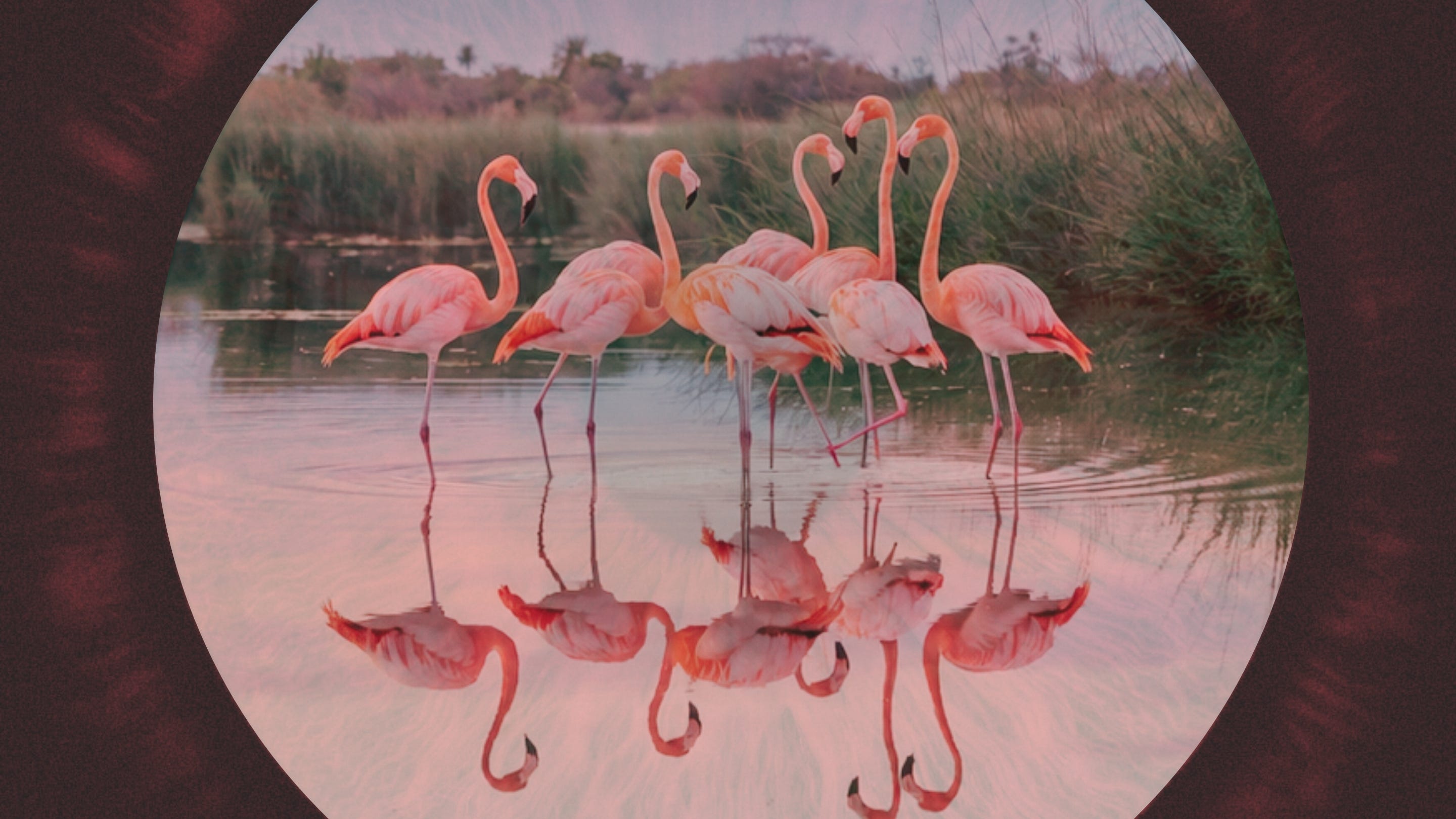
Then, a few summers ago, a couple on a friend’s boat stopped for a swim. They waded ashore, hiked barefoot to the summit, and, in the telling Ivanka Trump gave a business podcast this June, were “captivated.” She described the island as a find, almost a discovery, as if no one had ever seen it before. Albania’s government has since approved a $1.4 billion plan to turn the fortress into an ultra-luxury resort, granted the developers a decade untaxed during construction, and watched Gulf sovereign wealth line up behind the project. Across the bay sits a protected wetland where flamingos breed, which is why the streets of Tirana have spent the summer filling with pink cardboard birds and furious Albanians.
Seventy years of holding off invaders only to be taken down by a luxury resort pitch.


And Sazan is one purchase in a stampede. Last year 142,000 millionaires moved countries, the most ever counted, and the advisers who arrange these migrations expect 165,000 this year. That’s my entire hometown of Bariloche, in Argentine Patagonia, packing up and relocating with better luggage.
There’s now a whole industry of immigration lawyers, passport brokers and “golden visa” consultants built to help rich people move countries. In 2025, that business pulled in about $40 billion, roughly double what it did before the pandemic and more than Albania’s entire economy (the same Albania that’s currently offering an island to developers).
And it’s not only people fleeing “worse” places. The U.S., the country everyone used to run toward, has reportedly gone from a minor side market to the main destination for people trying to buy their way out.
You read all that and file it where I first filed it: taxes, politics, yachts, villas in paradise and all the usual rich-person whims.
But forget what they say. Watch what they’re buying.


Ask The Money, Not The Microphone
Spread the purchases of the last decade across a map and start pushing pins. Ranches in Patagonia. Sheep stations and bunkers on New Zealand’s South Island. Cabins in Lapland. Compounds in rural Canada, acreage in Tasmania, farmland around the Great Lakes. Now stand back and ask what a Finnish forest has in common with a Fjordland valley and the Argentine lake district, because it isn’t nightlife.
Every pin leans toward the same short list: high latitude or high altitude, cool, wet, far from crowded coasts, sitting on fresh water.
An adaptation scholar named Jesse Keenan toured the Great Lakes pitching “Climate-Proof Duluth” as a slogan for a city that could shelter people fleeing heat and hurricanes. Buffalo’s mayor stood up at his State of the City address and declared his town a “climate refuge city.” A 2018 magazine feature blessed Asheville, North Carolina, as a “climate haven.”
The wealthy were reading the same map. In Silicon Valley, the LinkedIn co-founder Reid Hoffman told a reporter that buying a house in New Zealand had become code for “apocalypse insurance.”
Peter Thiel liked the insurance so much that New Zealand made him a citizen after twelve days in the country, less time on the ground than a gap-year backpacker spends recovering in Queenstown, and he promptly picked up a lakeside estate near Wanaka. Oh, and he’s been hanging around my Patagonian backyard lately.
And let’s talk about Ivanka’s dad, Mr.President Trump, who is sure climate change is the largest con-job ever, and a hoax invented by China, and whose administration has spent two terms governing accordingly. Down here, my own puppet president calls the warming a “socialist lie” while foreign capital prices the burned forests of my province.
The people most publicly certain that nothing is wrong keep buying property in the very places the climate scientists they love to mock (and fire) say will stay livable the longest. A camera can repeat any story you want. But a deed is meant to be true.
So take the purchases seriously and ask what they are really buying. Nobody needs a fifth house, and land was never scarce. What these coordinates share is the cooler nights, the winters and rivers that show up, the closest thing we still have to the polite, well-behaved climate we’ve enjoyed for about 10,000 years, inside which every crop, city, insurance table, and coastline we own was designed.
That’s the product. They’re shopping for the Holocene, cash offer, no inspection.
There’s just a problem with the inventory.
Obituaries In Paradise
Suppose you’d read that Asheville line in 2018 and believed it. Plenty of people did; the town filled with newcomers who’d chosen the mountains over the coast and the rain shadow over the floodplain. In September 2024, Hurricane Helene came off a bathtub-warm Gulf, crossed two states, and unloaded on those mountains until the rivers took the roads, the water system, and whole neighborhoods downhill. Warming had made rainfall like Helene’s about 10% heavier and a storm of that intensity 2.5 times more likely, feeding on sea-surface heat made 200 to 500 times likelier by burned fossil fuels.

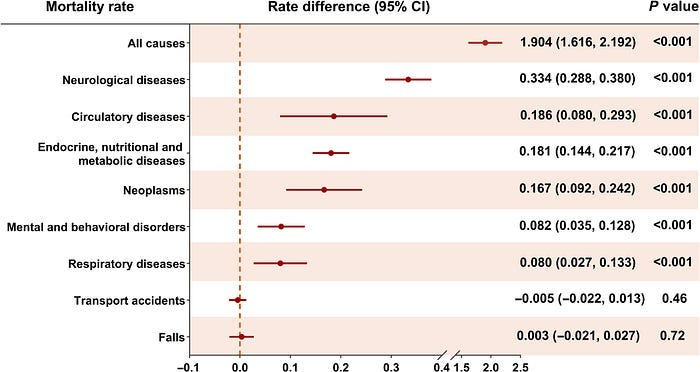
And the storm keeps collecting long after the flags come down. The average US hurricane causes seven to eleven thousand excess deaths over the fifteen years that follow landfall, as broken clinics, drained savings, and scattered neighbors do their slow work. The dying stays long after the flood.
Duluth, the city crowned climate-proof, spent part of this July under Canadian wildfire smoke that pushed its air quality index to 934, on a scale where 300 already means seal the windows. The haven didn’t flood or burn. It just became…unbreathable.
Lapland’s turn came last summer. Finland logged 22 consecutive days above 30°C (86°F), the longest heat streak in its recorded history, an event human warming made about 2°C (3.6°F) hotter and at least ten times more likely. Norwegian authorities warned drivers about reindeer sheltering in highway tunnels. Hospitals inside the Arctic Circle overflowed. At the Santa Claus village in Rovaniemi, with the thermometer reading 33°C (91°F), a man in a fur-trimmed suit briefed his elves on the symptoms of sunstroke.
New Zealand, the apocalypse-insurance capital of the world, watched the Nelson and Tasman districts go under states of emergency in mid-2025 as rivers hit levels locals were told to expect once a century. Nelson had already flooded in 2022. Once-a-century water, twice in three years, in the safest country Silicon Valley money can buy.
And then there’s my backyard, which sits on the same shopping list. I could put my house on the market tomorrow and the listing would basically write itself: “Pristine lakes, crisp air, cool summers, a safe corner of Patagonia.”
What the listing wouldn’t tell you is the part locals live with.
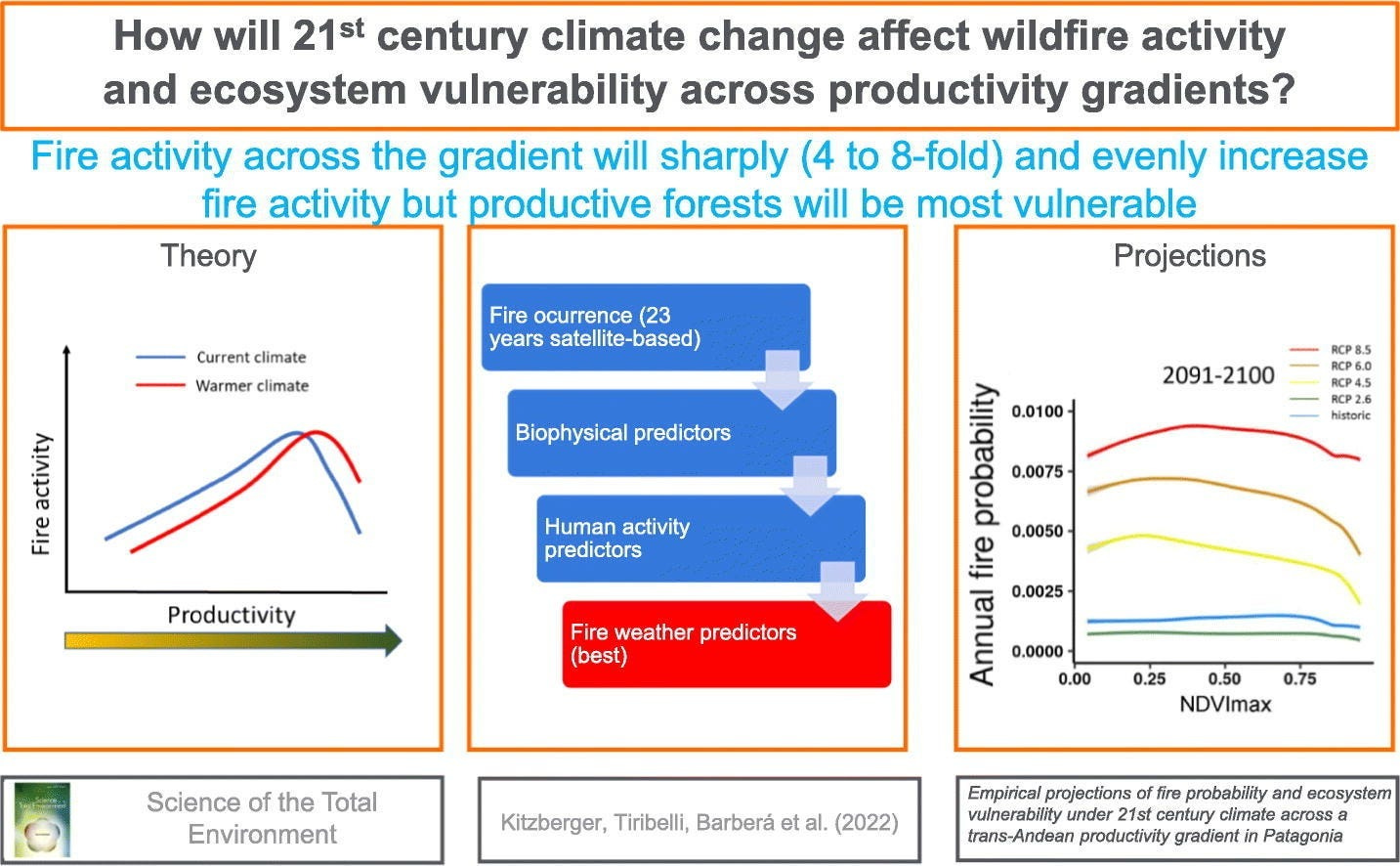
In just one year, wildfires in Andean Patagonia quadrupled. The region has been drying out for fifty years, turning forests into kindling. Now lightning is starting fires in protected areas where there isn’t even a road for a fire truck to take. And last year, winter almost didn’t show up. The snowpack, that reliable “battery” that normally feeds our rivers through spring and summer, simply failed to form. I’ve watched smoke slide across lakes that are supposed to be the whole selling point of living here.

This year, the pattern reached the continent that thought it was writing the reports rather than starring in them. Western Europe just had its hottest June since records began, with soils parched from Spain to the Netherlands. Bordeaux cooked at 42°C (107.6°F) three days running and the kindle caught the spark. France has counted 312 fires this season against a typical year’s fifteen, with over 70,000 hectares gone and the most flammable weeks still ahead: in the Landes, Europe’s largest planted forest, whole towns have literally rehearsed evacuating, and 300,000 people have already been evacuated across the country and Spain.
The nights tell the harshest version of the story. Compared with the early-2000s baseline, days like June’s are about 10 times more likely and nighttime heat 100 times more likely. The cool night was the mercy that made old heatwaves survivable. It’s the first thing the new climate repossessed. Old heatwaves were brutal, but the evenings still gave you a break: you could open a window, your body could cool down, you could sleep. Those merciful “cool nights” are mostly gone.
UK scientists revisiting the famous 1976 heatwave found that the same setup today already runs about 3°C (5.4°F) hotter and could push parts of Britain toward 45°C (113°F) within three decades.


And that’s the pattern across all these obituaries. Asheville’s mountains still stand; its water system drowned. Duluth didn’t burn; its air became smoke from somebody else’s fire. Lapland kept its reindeer; it lost its cold. The havens aren’t failing at the margins. They’re failing first in the exact amenities they were bought for: the cool nights, the reliable winters, the water that shows up when it’s supposed to.
The Dying Fantasy
There’s always the counter-story. This time it was: “Heatwaves caused by fall in pollution.” And of course, within hours, a hard-right politician was telling his followers that “net stupid zero” was heating the continent and that everyone had been gaslit. The heat, in this version, is the fault of clean air. You cleaned up, and this is your reward.
So let’s give it a real answer instead of an eye-roll.
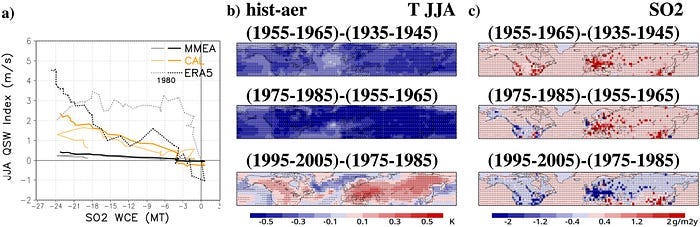
A recent paper looked at it as a real puzzle: why have European summers heated up faster than similar parts of the world? The researchers argue that Europe’s long cleanup of air pollution (the hazy “aerosols” from factories and tailpipes) did two things: it let more sunlight reach the ground, and it may have slightly shifted the jet stream toward the kind of stuck weather patterns that can trap heat over one region for weeks.
All true. Now here’s what the headline did with it.
Think of aerosol pollution like a dirty parasol over a hot stove. For decades, that parasol blocked a bit of the heat created by burning coal, oil, and gas. When Europe cleaned up its air (because that pollution was harming and killing people), it pulled the sunshade away. And folding the parasol revealed the stove: the heat was already there. So air pollution never causes or removes global warming; it only temporarily moderates it.
But the counter-story catches on because it taps into a real, lived feeling: the world keeps turning out worse than the “official” projections people remember hearing, and everyone can sense that widening gap. In that one narrow sense, the skeptics have stumbled onto something true, only they’re holding it backwards. The last decade suggests the bigger mistake hasn’t been exaggeration. It’s been that scientists, more often than not, have undersold what was coming.
The reasons are mostly right there in plain sight, daring you to “Don’t Look Up”.

No researcher wants to be the one who cried wolf. Careers get wrecked by one big, loud prediction and survive a thousand cautious ones. So climate communication has tended to stick to the “most likely” middle-of-the-road forecasts, because those are safer to defend.
A group of scientists argued this year that we still haven’t taken the “worst-case” futures seriously enough, and that it’s hard to steer away from a cliff if nobody is willing to map where the cliff actually is. The only global attempt at such a map dates to 2015, a world and half a degree ago. Researchers who studied the blind spot found the scientific literature systematically tilted toward moderate outcomes. So we’ve spent more time refining “bad, but manageable” possibilities than investigating “this breaks society” possibilities, the futures we most need to avoid.
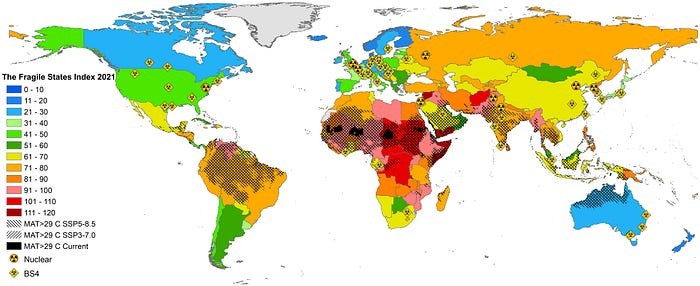
Meanwhile the baseline keeps moving. On the current course, within the lifetime of a child born today, the belt of near-unlivable heat that now covers a sliver of the Sahara is projected to stretch across land where one in three humans lives.
Put those together, and you get a grim symmetry.
The deniers told people, “You’re safe.”
The scientists often communicated, “It’ll be serious, but not that serious.”
The map shows that “climate havens” are dead.
Dead as a category, as a promise that “this valley, this city, this latitude will stay okay even if the rest of the world gets chaotic.” Some places will do better than others for a while, yes. But the fantasy of a permanently safe refuge you can buy and own is fading fast.
The End Of The World Has Excellent Views
In July 1995, a heat dome sat on Chicago for a week and killed 739 people. Two neighborhoods on the South Side went through it side by side: same temperatures, same poverty, same demographics, streets you could walk between in twenty minutes. But the death toll wasn’t even close. Englewood lost 33 people per 100,000. Auburn Gresham, right next door, lost three.

Contribute to the project: we need you!!!
A sociologist studied why, expecting the usual suspects in money, air conditioning, healthcare. The difference was social glue. Auburn Gresham still had corner stores, people on stoops, busy sidewalks, block clubs, neighbors who noticed when someone didn’t answer the door. Englewood had been hollowed out for years. Because in a heatwave, survival isn’t just a gadget. It’s being seen.
That gap (ten times the survival rate) is the argument against the bunker, written by the dead.
Because look again at what the billionaires did. They read the climate map and chose distance from coasts, and crowds, and everyone else. But the disasters above keep teaching the same lesson: distance gets punished first.

When Helene took the roads out of the Carolina mountains, the first machines to reach the cut-off hollows were neighbors’ chainsaws, hours and days ahead of any helicopter. When the smoke sits on Duluth, or Gironde or Patagonia, no amount of acreage gives you clean air. An “escape” island imports every one of its failures: the pump that needs a part, the food that needs a farmer, the guard whose loyalty outlives the wire transfer. They bought isolation as safety. But isolation is the vulnerability sold at a premium.
The alternative is already here, and it’s painfully unsexy: towns that invest in each other. Outside Bordeaux, a forest-edge city called Saint-Médard-en-Jalles spent years preparing for the fires it knew would come: a community health center, a public water utility, cooler school cafeterias, greener schoolyards, evacuation drills, and plans argued out in public meetings instead of scribbled during panic. This month, when the fires did arrive, the town began evacuating in order. No infinity pool, but ten times the survival lives in exactly that kind of boring preparedness.
Which brings the story back to a fortified island in the Adriatic, because Sazan has hosted an “end of the world” fantasy before. The men who poured its concrete also believed safety could be engineered behind walls and backed by weapons. Their bomb never fell. Their regime fell instead, the garrison sailed home, and the tunnels rusted open to the goats and the wind, while across the bay the crowded, unfortified port of Vlorë kept right on living: fishing, arguing, raising children, and needing each other.
Now the new doomsday money has arrived to build on top of the old kind. The leaked plans run to 600 townhouses, 520 villas, 1,400 apartments, a golf course, and a marina sized for 350 superyachts, all on an island with no running water, no sewage, and ground still holding Soviet-era ammunition and unexploded mines. Developing it was illegal until two years ago; Sazan sits inside a national marine park, so parliament wrote an exception for five-star hotels. And under the strategic-investor decision, Albania’s defense ministry, meaning Albanian taxpayers, will clear the old apocalypse’s ordnance so the new one can pour foundations. A night at the finished resort could cost a local a month’s wages. So the old fortress kept the neighbors out with mines but the new one will manage it with the room rate.
Remember the swim that started all this: the couple wading ashore and going home captivated, discoverers of an island armies have garrisoned since antiquity. Brunela Mertiri swam at Pishë Poro, on the shore facing Sazan, her entire life, until razor-wire fences went up across the beach this spring. But in her own words, this “is not Kastrati’s nor Kushner’s nor Trump’s nor anyone else’s.”
Ground broke in April and stalled almost immediately, snagged on an environmental review and a corruption investigation. Meanwhile, tens of thousands of Albanians have kept marching on the prime minister’s office under the banner of the “Flamingo Revolution,” named for the migratory birds that nest in the nearby Narta Lagoon, and it has grown into the country’s largest movement since 1991, since the fall of the regime that poured Sazan’s concrete. Even the European Parliament has weighed in, warning that the project could jeopardize Albania’s EU accession.

The prime minister, trying to shrug it off, told the Financial Times that without Kushner “nobody would give a shit about flamingos, about Albania, about nothing.” The grandchildren of the bunker-builders heard him and kept marching, behind a bird that survives the seasons by moving, and never moves alone.
So buy the island if you can afford it. The end of the world has excellent views.
It just doesn’t have neighbors.
Thank you for this update in climate awareness. Yes, the greedy psychopaths and degenerates that have destroyed much of the habitability of the planet are finding out there’s nowhere to hide from the consequences of their avarice-driven privileged decisions and disastrous deeds.
Unfortunately, the poor and those that didn’t contribute to these conditions (mainly indigenous communities around the world) are already suffering the worse impacts of climate catastrophe. Hope the rich assholes get their due.
As for the rest, your advice is time tested and true…build community, resilience, sustainability and trust.
end of the world tip:
stay where you are
build community
adapt
that's all.